
Answers before you build.
Climate-resilient construction is still new to many owners, developers, and municipalities. These questions explain how the ClimateStructure approach works.
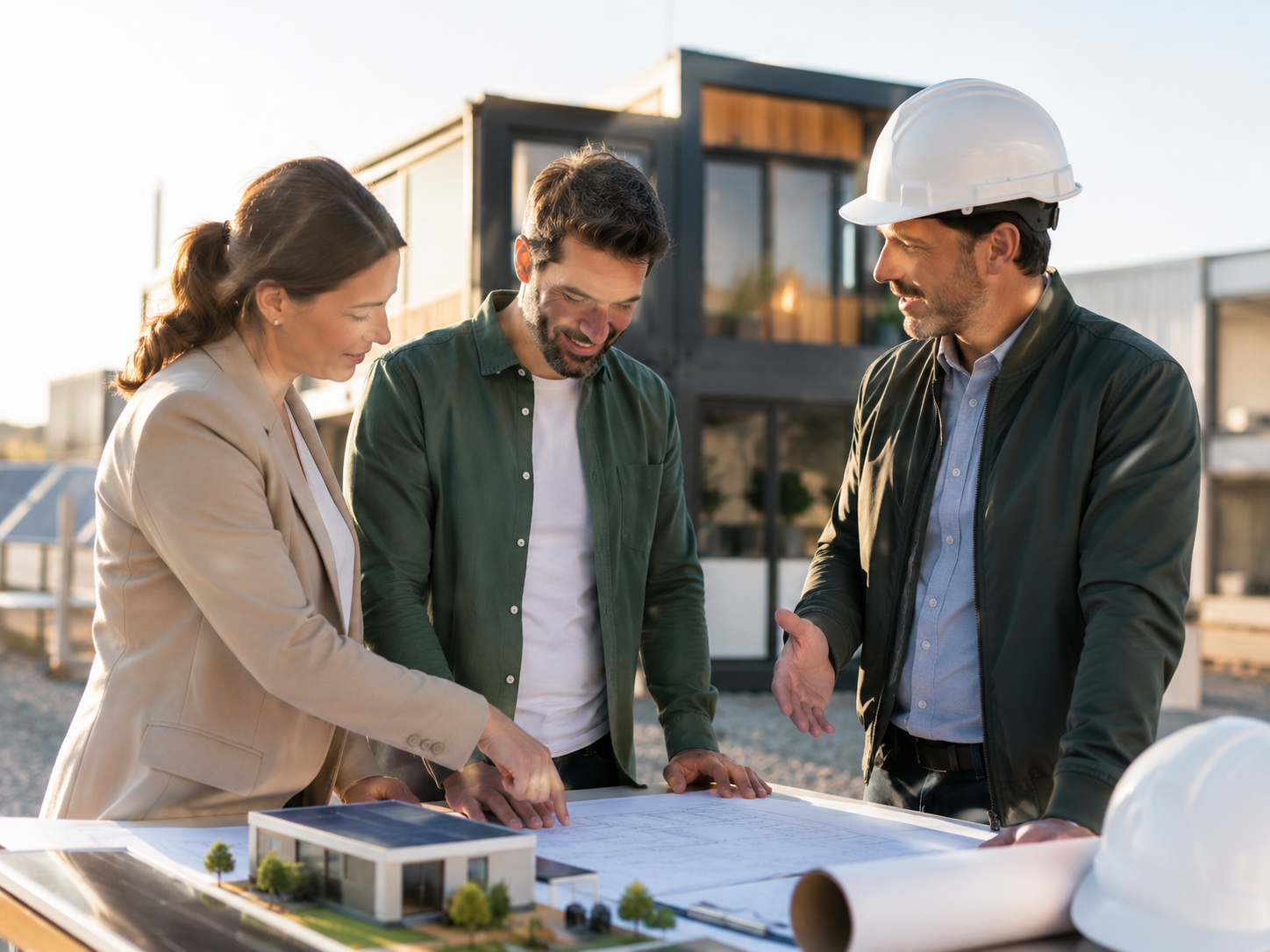
For homeowners
Start with land, local hazards, building code, insurance concerns, energy goals, and the kind of lifestyle the structure must support.
For developers
Start with unit count, target market, repeatability, installation logistics, financing milestones, and the approvals needed to scale.
Common questions
What are climate-resilient structures?
Climate-resilient structures are buildings planned around specific hazards such as wind, rain, fire, heat, outages, humidity, poor air quality, and recovery after disruption.
Are your buildings hurricane-proof or fire-proof?
No responsible builder should promise that. Structures can be engineered and detailed for higher resilience, but final performance depends on the site, codes, engineering, selected materials, installation, maintenance, and the severity of the event.
Do you offer zero-energy structures?
Yes. Zero-energy or near-zero-energy options may include a high-performance envelope, efficient mechanical systems, solar, storage, smart controls, and load management.
Do modular structures qualify for normal permits?
Permitting depends on state and local rules, building type, foundation, utility connection, and engineering documentation. The process should be confirmed for each project location.